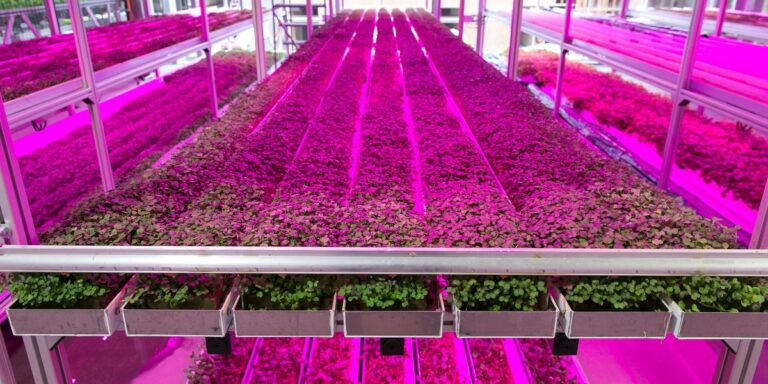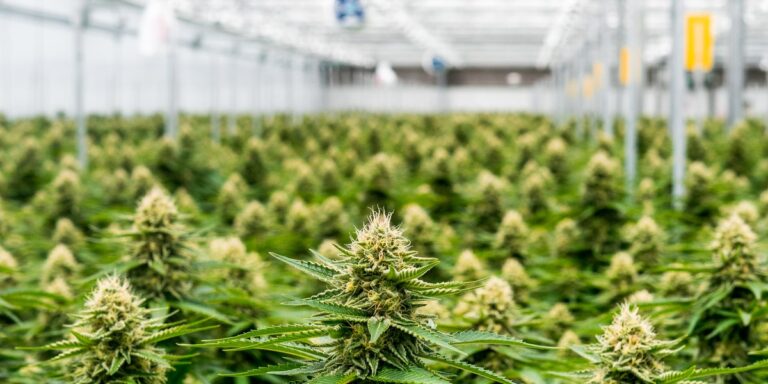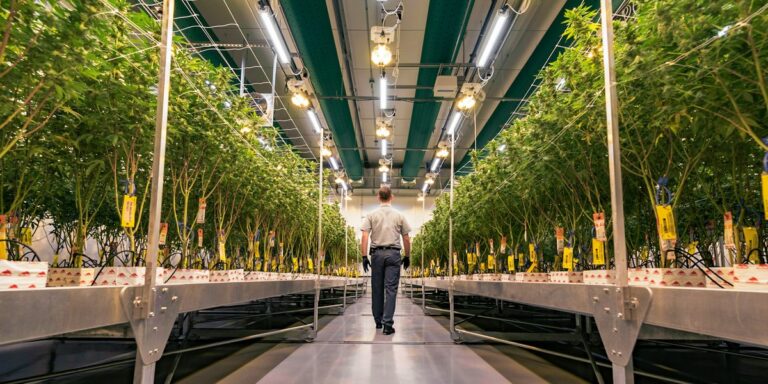

Greenhouse and indoor-grown leafy greens and culinary herbs provide many advantages over field-grown crops, including a more stable climate and consistent harvest time. Growers can also control lighting, shading, and CO2. These factors can help increase food safety. Low ambient light levels in the winter and on cloudy days make supplemental lighting essential for producing high-quality, uniform greens year-round. Lighting is tied to overall quality and yields, so having a reliable system that delivers on the goals you want to achieve is important. With so many lighting options on the market, deciding which direction to go can be overwhelming. At P.L. Light Systems, we produce and sell both HID and LED luminaires and have been helping North American growers build their businesses and achieve their goals for 45+ years.
Leafy greens and herbs are usually started as seedlings before they reach the production bench, and that stage needs far less light than a finished crop. Our article on lighting for successful plant propagation covers the seedling and cutting targets.
Free guide
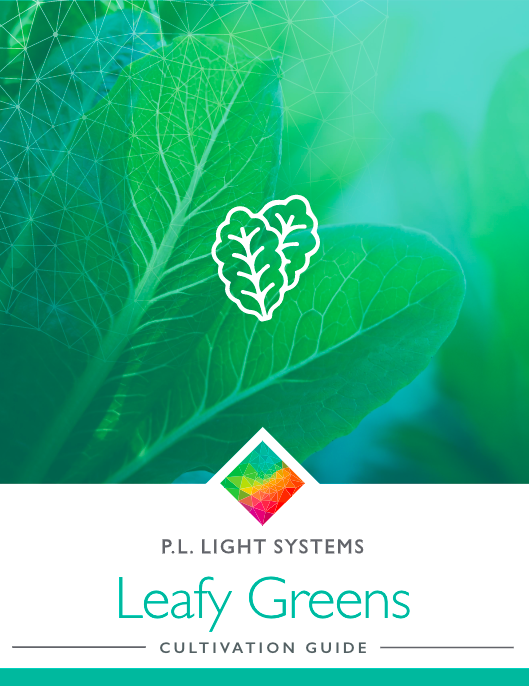
Leafy Greens Cultivation Guide
- Explore the basic concepts of how the light environment affects plant growth
- Learn about lighting requirements for leafy greens, microgreens, and culinary herb production
- Discover what lighting system works best for your application
HID Lighting Systems
High-pressure sodium (HPS) luminaires have long been used by growers for a variety of leafy greens, including lettuces and herbs. Because they direct heat onto the crop, HPS grow lights are well suited to growers in Northern Climates who rely on the heat to improve crop quality and help offset heating costs. We have worked with growers, such as Old Souls Farms in Saint Paris, Ohio, who use P.L. Light Systems’ NXT-LP luminaires to grow high-quality greens year-round.
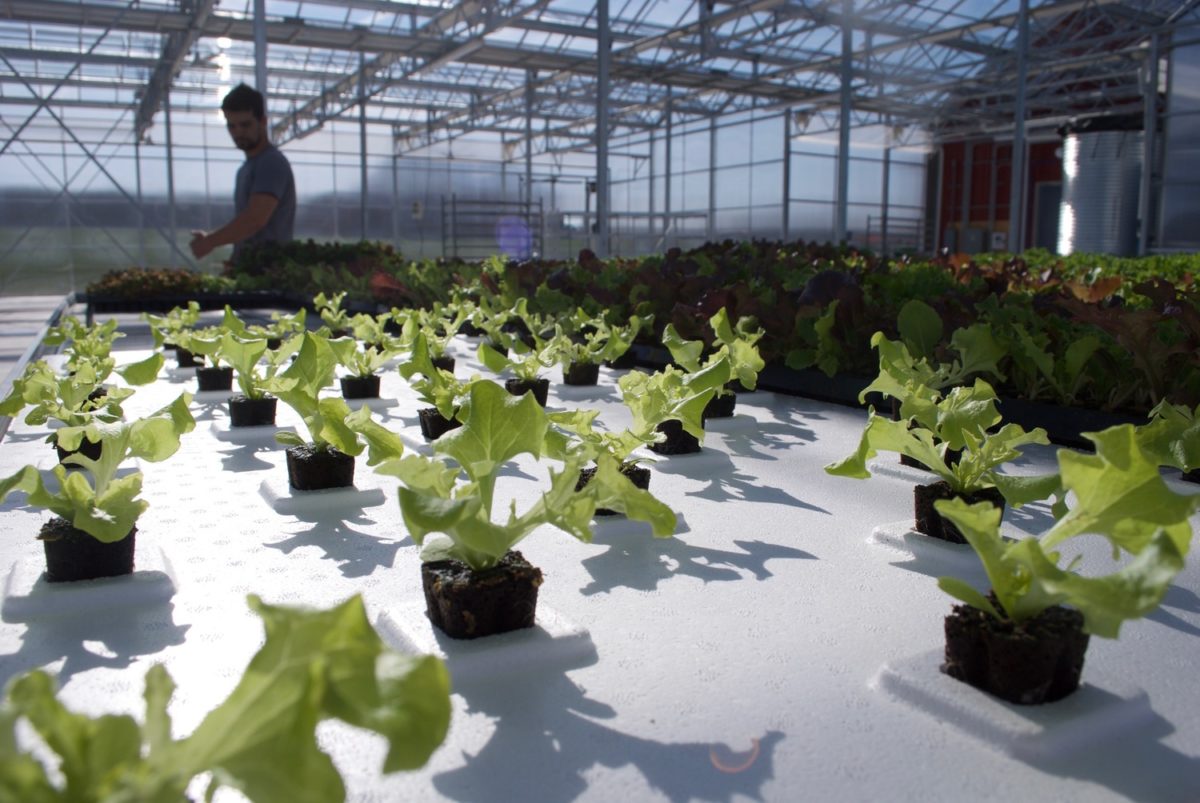
For growers looking to use HID luminaires, we recommend either the NXT-LP for low-ceiling applications or the NXT2. Either of these high-efficiency luminaires is designed to achieve optimum light intensity and evenly distribute the light across the surface of the crop―with fewer luminaires.

LED Luminaires
LED luminaires can be a great choice for many leafy green growers thanks to their high efficiency and ability to dissipate heat from the crop. Other advantages of LEDs over traditional lighting include PAR efficacy, ability to target specific wavelengths, and control over light intensity (dimming).
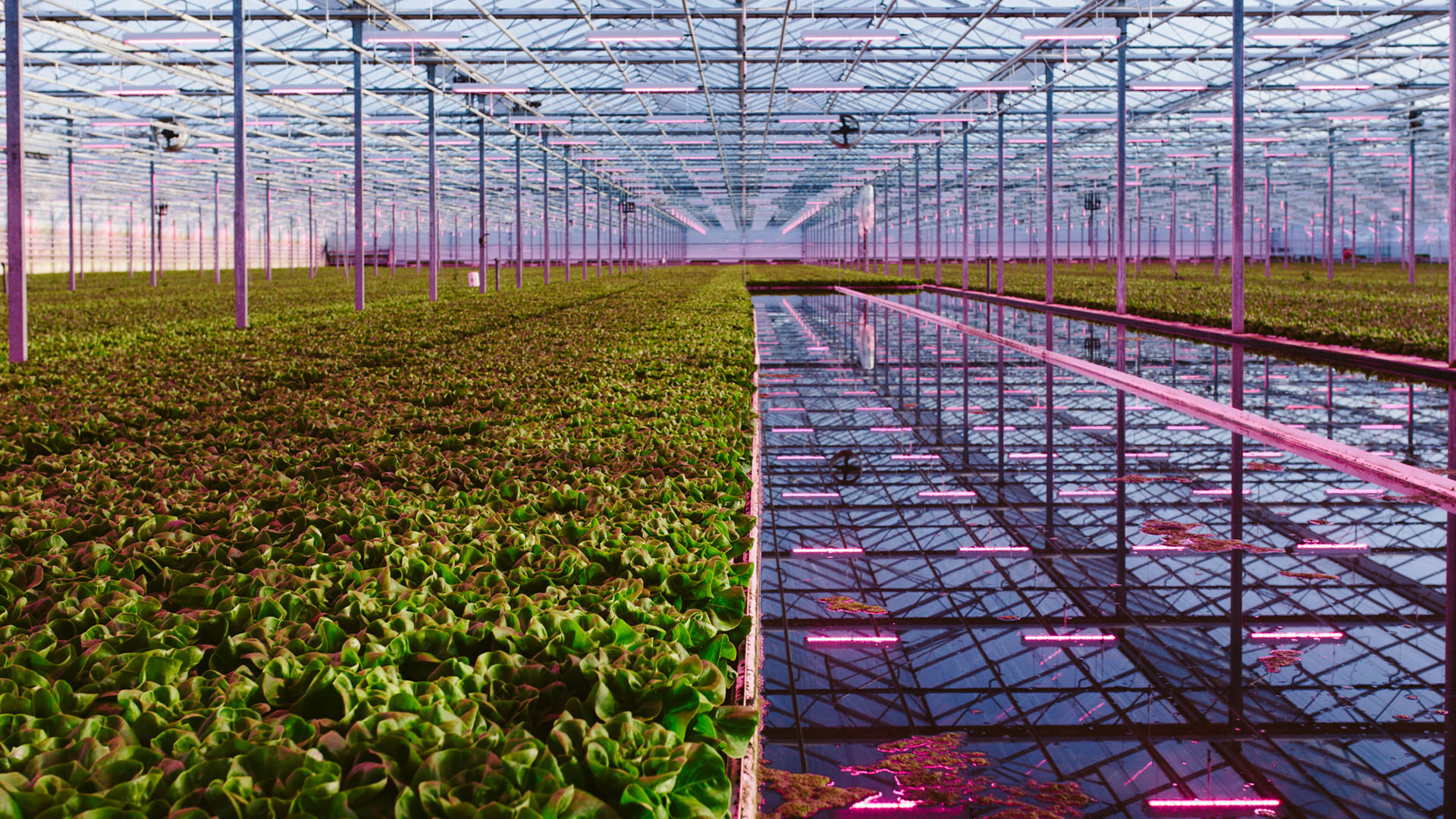
We recommend the TriPlane Linear in the red-white, medium blue (RWMB) spectrum to greenhouse growers. This choice is optimized for plant growth and photosynthesis. See how DeGoede Farms, a leafy greens grower in Oregon, has used the HortiLED Top to expand their business and supply year-round greens for their region.
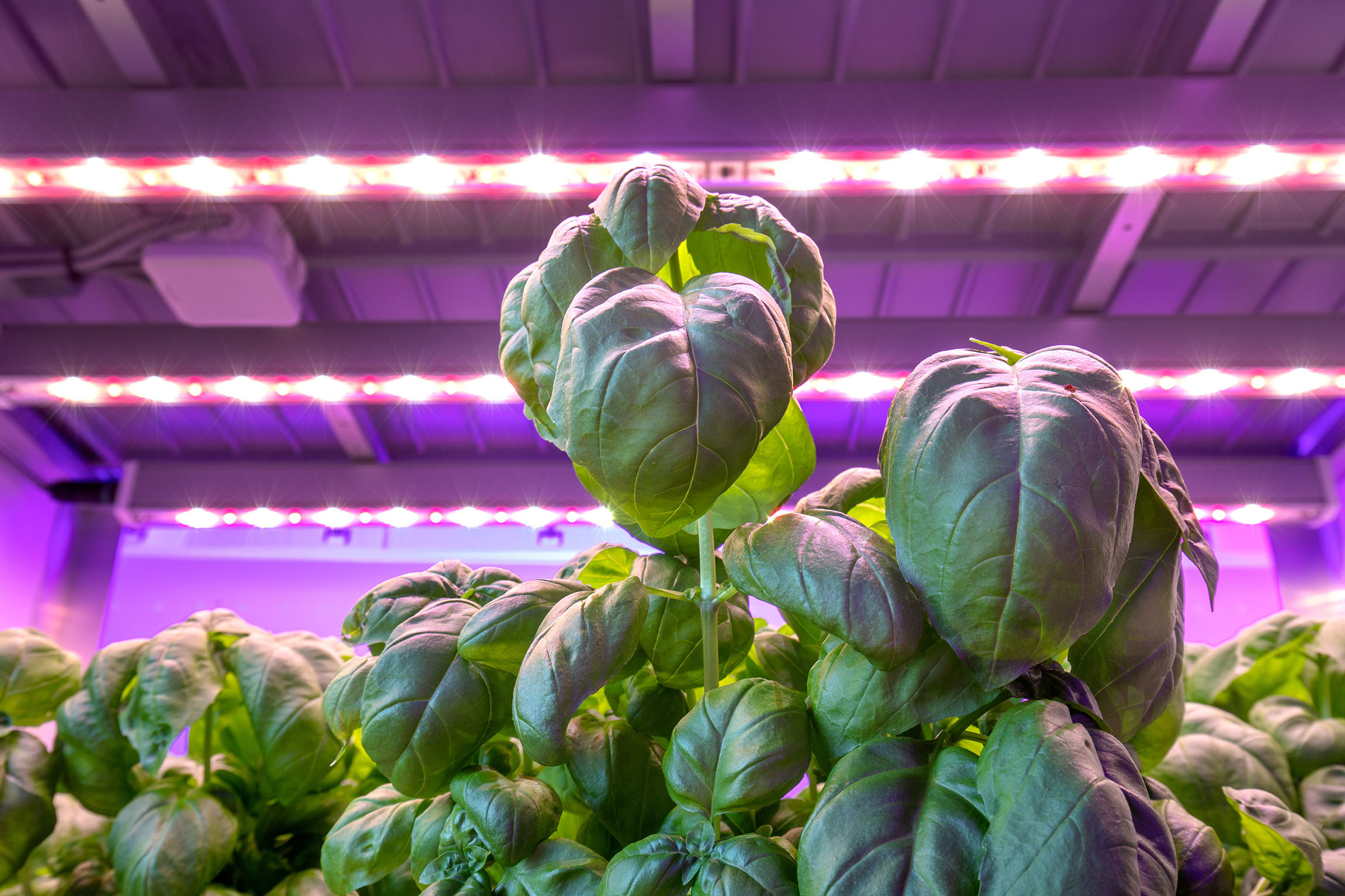
For indoor operations, we recommend using the TriPlane Linear Daylight spectrum, which has been optimized for plant growth in sole source lighting applications. For close canopy or tightly-tiered vertical operations, the VertiMax would make a great choice.
Hybrid Systems
There are many benefits and advantages to both LED and high-intensity discharge (HID) technologies. One of the best ways to take advantage of them is by implementing a hybrid lighting system. A hybrid lighting system is where a growing facility installs both LED and HPS lighting in one grow space. This combination can provide the ideal balance between diffuse light distribution and spectral efficiencies. It allows the flexibility to take advantage of the radiant heat from the HPS lighting while extending the supplemental lighting period into the spring by using the LED lights when outside temperatures and daylight hours increase. For more information, check out our blog on hybrid lighting systems.
Tell us your crop, structure, and targets. We engineer the rest.