
Pepper, tomato and cucumber crops require consistent levels of light for year round production. There are many things to consider before investing in a lighting solution and understanding your growing environment―and the goals you want to achieve―will help in choosing a system that best suits your needs. Having reliable and efficient lighting strategies for vine crops is important not only for plant growth, but for increasing yields and maximizing profits. Since P.L. Light Systems manufactures and sells both HID and LED luminaires, there is no bias towards one system. We are motivated only by what works best for your application.
Cucumber, tomato and peppers are similar crops in that they all require high light intensities for proper growth and development. Since light intensity is tied to overall yield and crop productivity, supplemental lighting is an important factor for ensuring consistent yields and quality. Because vine crops are generally grown in greenhouse environments, the lighting strategies suggested are for greenhouse, or supplemental lighting applications unless stated otherwise.
Free guide
Vine Crop Cultivation Guide
- Explore the basic concepts of how the light environment affects plant growth
- Learn about lighting requirements for tomato, pepper and cucumber production
- Discover what lighting system works best for your application
HPS Lighting Strategies
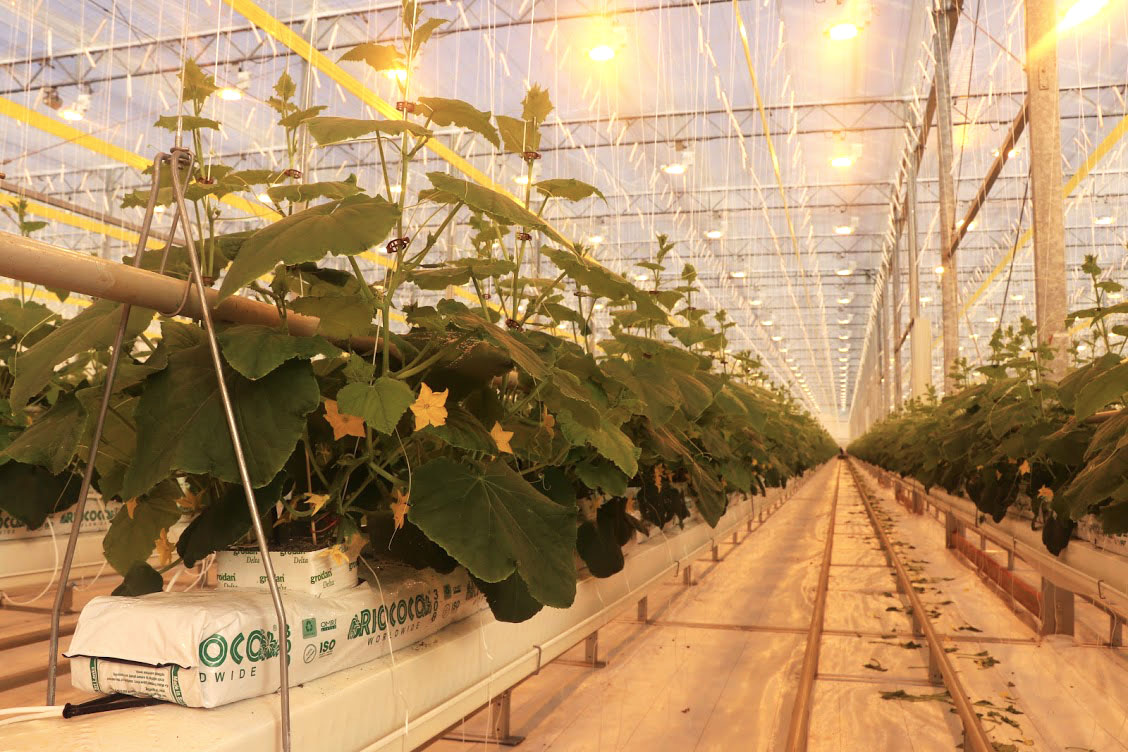
When it comes to vine crops, overhead HPS luminaires continue to be the most popular lighting choice, especially among greenhouse growers in northern latitudes. High pressure sodium (HPS) lighting has been the mainstay in commercial horticultural applications since its introduction. The spectrum emitted by HPS lamps have been a tried and true combination for plant growth for over 40 years. The spectrum is rich in red wavelengths that provide an effect of daylength perception in plants promoting both growth and flowering and the heat emitted is important for crop development.
For tomato, cucumber and pepper production we recommend P.L. Light Systems’ high efficiency NXT series with HPS lamps, which enables growers to achieve optimum light intensity uniformly across the surface of the crop with fewer luminaires.
LED Lighting Strategies
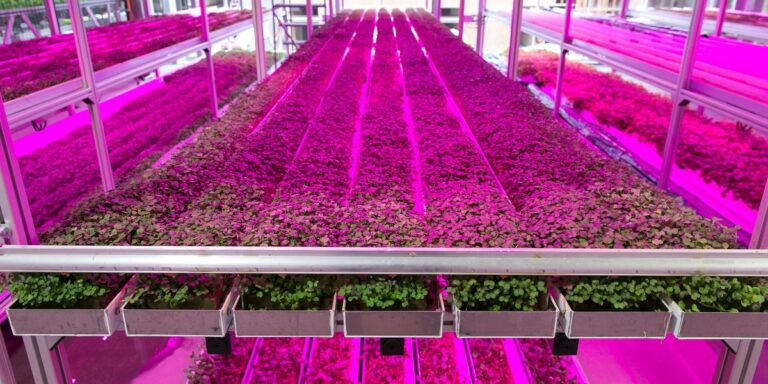
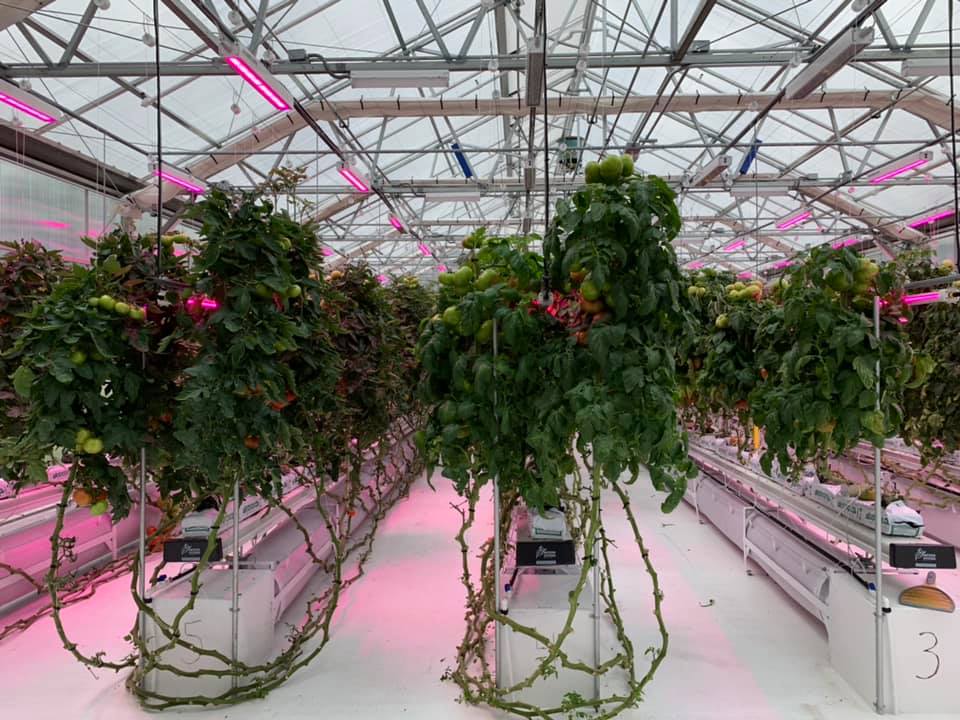
Regarding tomato, pepper and cucumber production, we recommend that LEDs are best suited for hybrid LED-HPS lighting solutions, when lights need to be placed close to the crop canopy, or in warmer climates that do not need to rely on heat in the winter but still require extra lighting in the low light times of the year.
Choosing to go LED? We recommend our highly efficient ParFX Ultra for vine crop production.
For those who have the advantage of natural sunlight, we recommend supplementing with a more efficient red-white, medium blue (RWMB) spectrum. This helps with optimizing photosynthesis.
What we suggest for indoor grow operations, where natural light is limited, is the use of broad-spectrum lighting. Using a broad-spectrum allows plants to take the wavelengths they need for growth, when they need it, and creates a more visually comfortable environment for workers―as the light appears white.
Hybrid Lighting Strategies
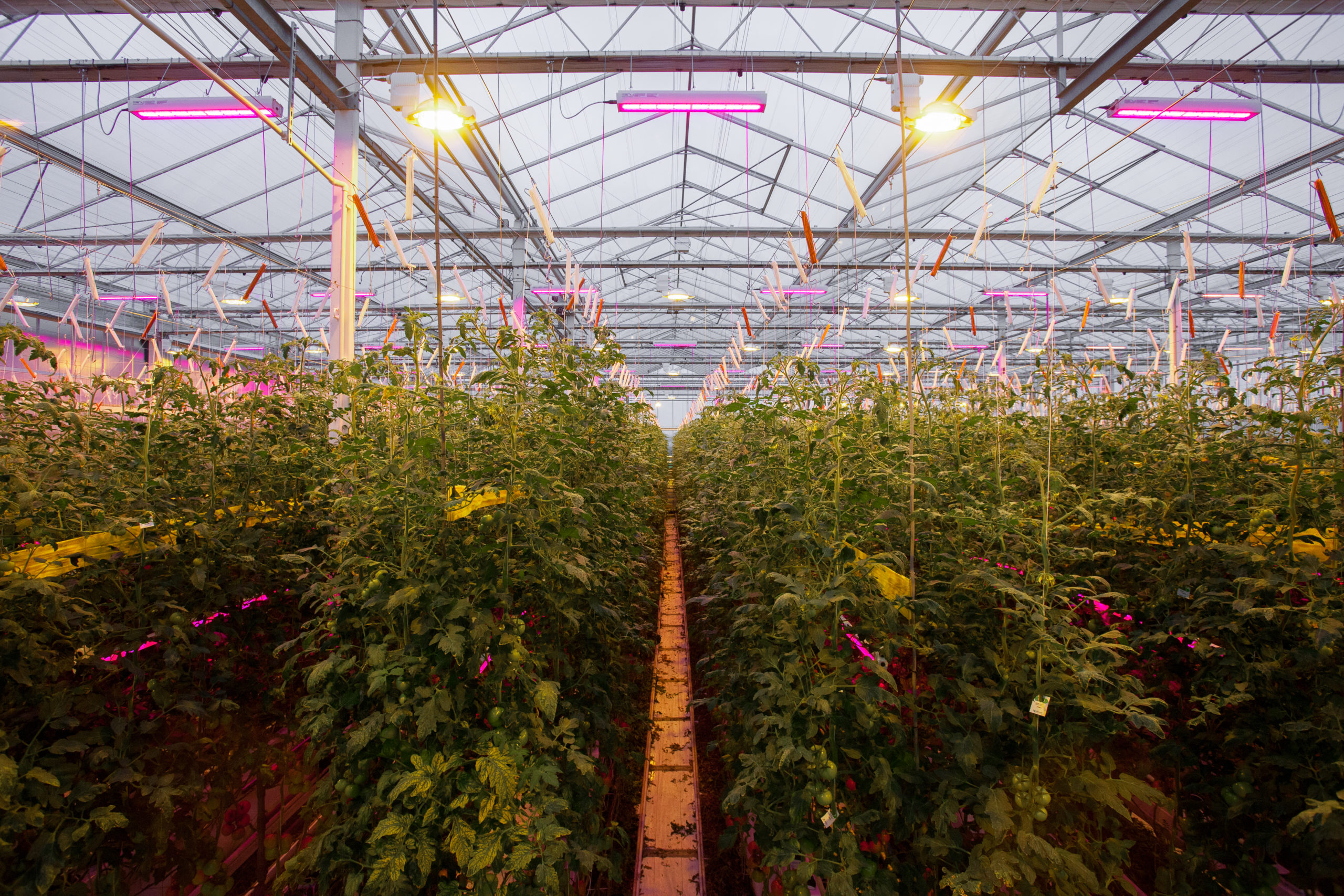
To get the best of the both technologies a hybrid LED-HPS lighting system can be used. It allows the flexibility to take advantage of the radiant heating from the HPS lighting. Hybrid lighting also extends the supplemental lighting period longer into the spring. Using the LED lights only when outside temperatures and daylight hours increase. A hybrid system also reduces the initial cost and can allow a grower to further manage costs by maintaining their existing infrastructure.
Ready to see what P.L. Light Systems can do for your growing operation? Get started with your own custom light plan or contact your local sales manager.
Tell us your crop, structure, and targets. We engineer the rest.